Before building or programming robots, it is important to understand what a robot actually is from an engineering perspective. Rather than thinking of a robot as a collection of parts, it is more useful to think of it as a system.
At its core, a robot is a system that takes in information, processes it, and produces actions.
This can be represented as:
Inputs → Processing → Outputs
Inputs come from the robot’s environment. These are typically collected using sensors, which measure things like light, distance, or rotation. Processing is handled by the robot’s controller, which runs a program that decides what actions to take. Outputs are the physical actions of the robot, usually produced by motors or other actuators.
This system view is important because it applies to all robots, regardless of size or complexity. A small WRO robot following a line and a self-driving car navigating a city both operate using the same fundamental structure.
In the context of WRO, this system is constantly active. As the robot moves through the field, it repeatedly reads sensor values, processes them through its program, and updates its motor outputs. This happens many times per second, allowing the robot to react to its environment in real time.
A key concept that arises from this is the idea of a control loop. Instead of executing a fixed sequence of steps, most robots operate in a loop where they continuously:
For example, when a robot is following a line, it does not simply “drive forward.” It continuously checks the position of the line using a sensor and adjusts its motor speeds to stay on track. This idea will become especially important later when we study control systems.
Another important concept in robotics is actuation, which refers to how a robot produces movement. Motors are the most common form of actuation in WRO robots, and they allow the robot to move forward, turn, or operate mechanisms.
Closely related to this is the idea of degrees of freedom. A degree of freedom represents an independent way in which a system can move. For example:
Understanding degrees of freedom helps in designing robots that are capable of performing the required tasks without unnecessary complexity. In WRO, most successful robots use the minimum number of degrees of freedom needed to complete the challenge reliably.
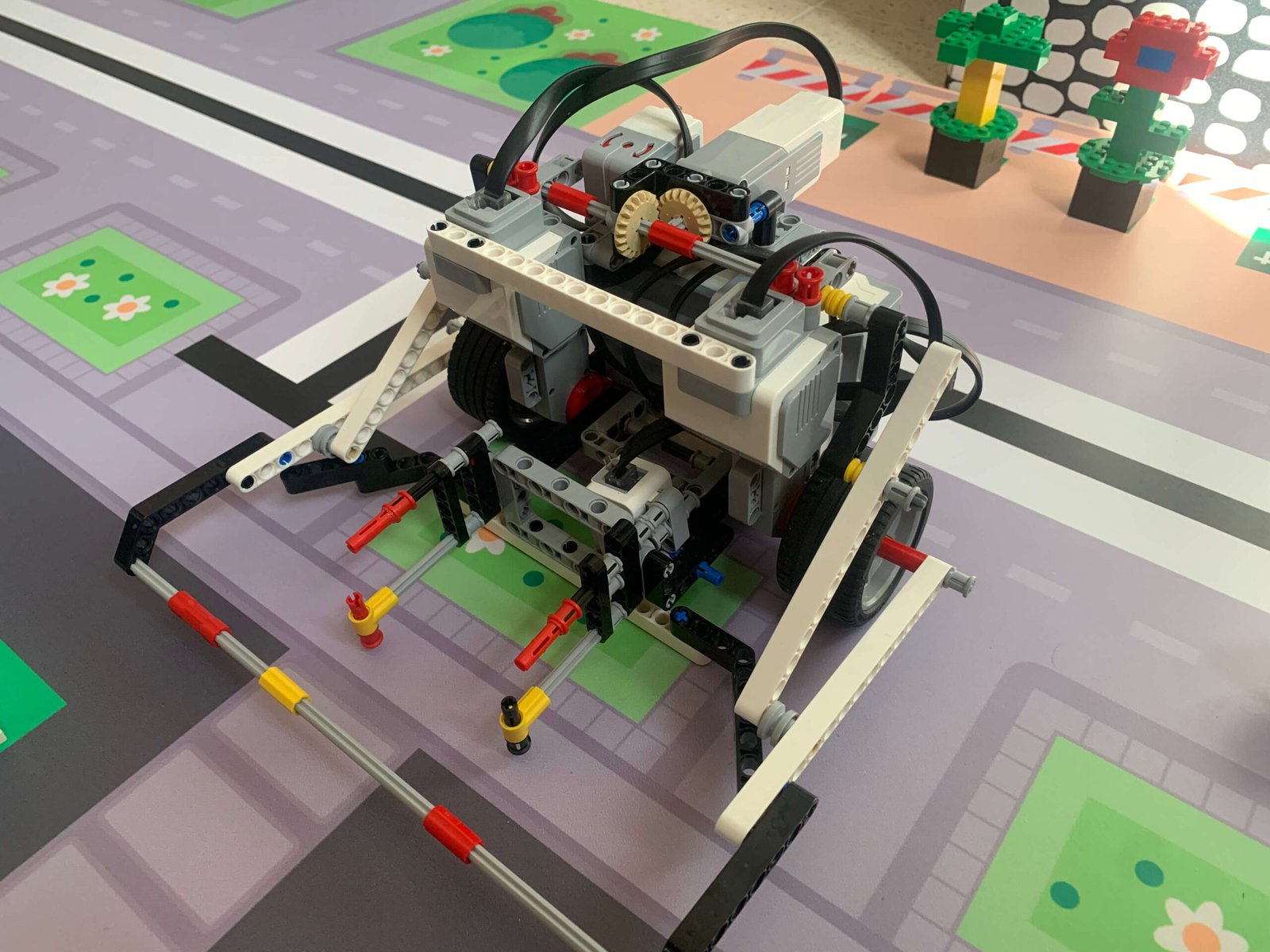
When we look at real WRO robots, these ideas become clearer. A typical RoboMission robot might use a color sensor to detect lines on the field (input), a program to determine whether it is veering off course (processing), and motors to adjust its movement (output). At the same time, it may use additional motors to operate a mechanism that pushes or lifts objects, adding more controlled motion to the system.
Even more advanced designs follow the same principles. Robots that use gyro sensors to turn precisely, or multiple sensors to navigate complex paths, are still operating within the same framework of inputs, processing, and outputs, combined within a continuous control loop.
Thinking about robots in this way helps shift the focus from simply assembling parts to designing systems that behave predictably and reliably. This perspective will be essential as we move into building physical robots, working with sensors, and developing programs that control them effectively.
In the next module, we will apply these ideas to the physical side of robotics by learning how to build strong, stable, and competition-ready robot structures.